
Blog
Cigarette Ingredients and Health Risks in Dubai, UAE

Cigarette Ingredients and Health Risks in Dubai, United Arab Emirates
Cigarettes contain far more than just tobacco. When burned, they produce a complex mixture of chemicals that can harm the human body. For those living in Dubai and elsewhere in the United Arab Emirates, it is essential to understand these components. Understanding them helps clarify what information is—and isn’t—provided on cigarette packaging, and explains why smoking poses serious health risks.
Whether you’re researching tobacco ingredients, examining product labels, or seeking reliable health information, it is crucial to distinguish common assumptions from proven facts. This guide outlines the main components of cigarettes, the substances in their smoke, their health effects, and the regulations governing tobacco products in the United Arab Emirates.
What are cigarettes made of?
Typically, a cigarette consists of processed tobacco, cigarette paper, a filter, and occasionally other ingredients added during production. The specific blend of these components varies by manufacturer and product.
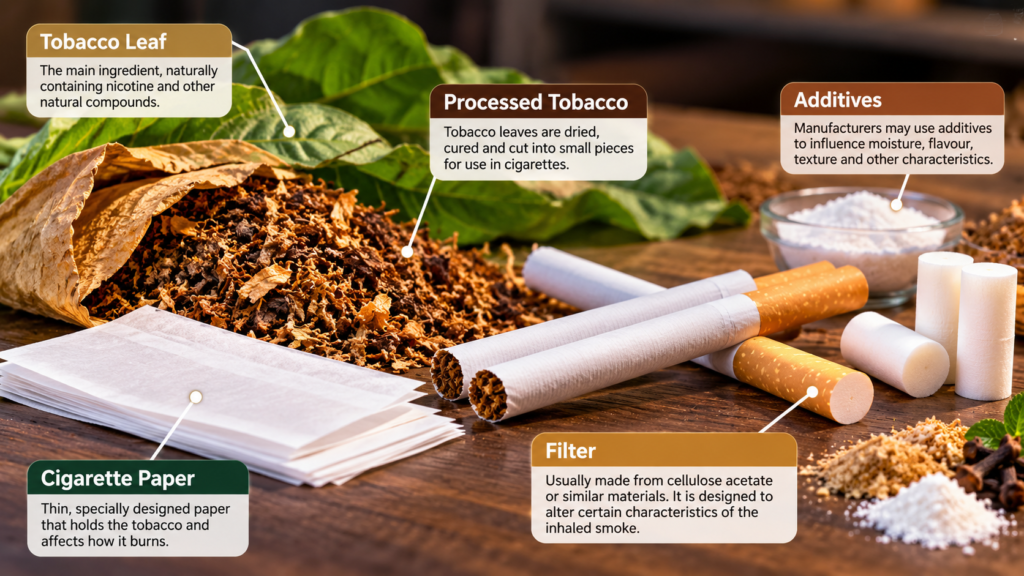
Tobacco naturally contains nicotine, which can lead to addiction. Manufacturers may also add various substances—known as additives—to alter the moisture, structure, flavor, or other characteristics of the cigarette. However, the presence of specific ingredients in tobacco does not necessarily reveal the full range of chemicals generated when the cigarette burns.
Cigarette paper affects how the product burns, while the filter is designed to alter certain smoke properties as it is inhaled. Nevertheless, none of these elements make smoking safe.
When reviewing product information in Mycig’s cigarette category, remember that packaging details and listed specifications describe the specific product. They do not provide a complete assessment of its health risks.
Chemical Components in Cigarette Smoke
Burning tobacco produces thousands of chemical compounds. According to the World Health Organization, tobacco smoke contains more than 7,000 chemical components, many of which are toxic and known to cause cancer.
Some of these components are naturally present in tobacco, while others form—or increase in concentration—during combustion. This distinction is significant because cigarette smoke is chemically far more complex than the raw tobacco leaf itself.
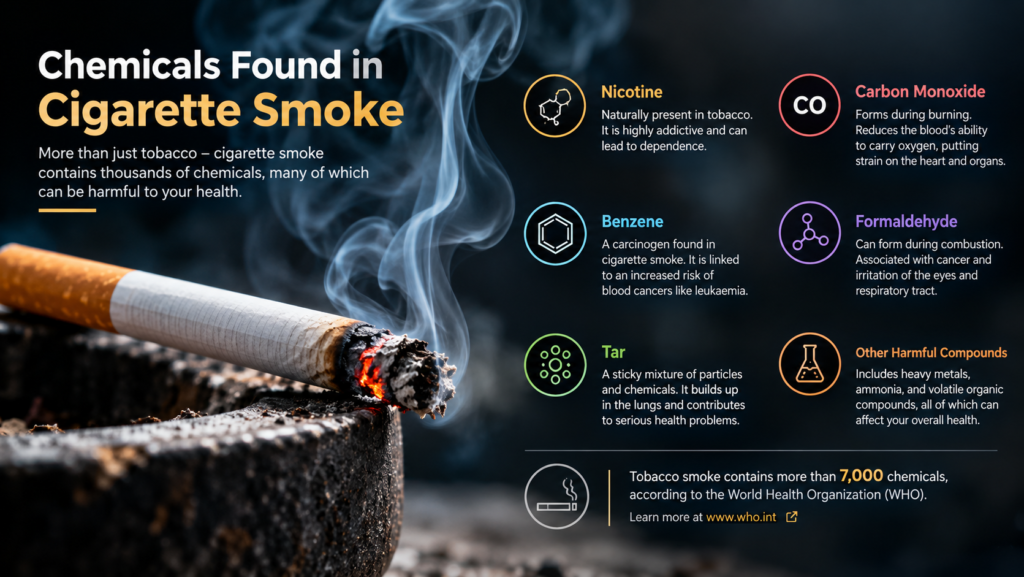
Nicotine
Nicotine occurs naturally in tobacco and is the primary driver of tobacco addiction. Repeated exposure leads to dependency, making it difficult for individuals to quit smoking, even when they are aware of the associated health risks.
Carbon Monoxide
This toxic gas is produced when tobacco undergoes incomplete combustion. When inhaled, it reduces the blood’s oxygen-carrying capacity, placing additional strain on the heart and other vital organs.
Benzene
Benzene is a chemical component found in cigarette smoke that is recognized as a human carcinogen (cancer-causing agent). Exposure to it increases the risk of various blood-related cancers, including leukemia.
Formaldehyde
Formaldehyde can form during tobacco combustion and is present in cigarette smoke. It is a harmful chemical that, in addition to increasing cancer risk, can cause irritation to the eyes and the respiratory tract.
Tar
In the context of cigarettes, “tar” refers to the solid particles that remain in the smoke after nicotine and water content have been removed. It is not a single substance but a complex mixture of many compounds, some of which cause serious health problems. These examples illustrate why looking at a single chemical component or a specific figure printed on a cigarette pack cannot provide a complete picture of the harm caused by smoking.
The Impact of Smoking on Human Health
The harmful effects of cigarette smoking are not limited to the lungs. Tobacco smoke can damage various organs in the body, and long-term smoking increases the risk of developing numerous diseases.
Lung and Respiratory Issues: Cigarette smoke irritates the airways and damages lung tissue. Long-term smoking is a primary cause of Chronic Obstructive Pulmonary Disease (COPD), which makes breathing progressively more difficult.
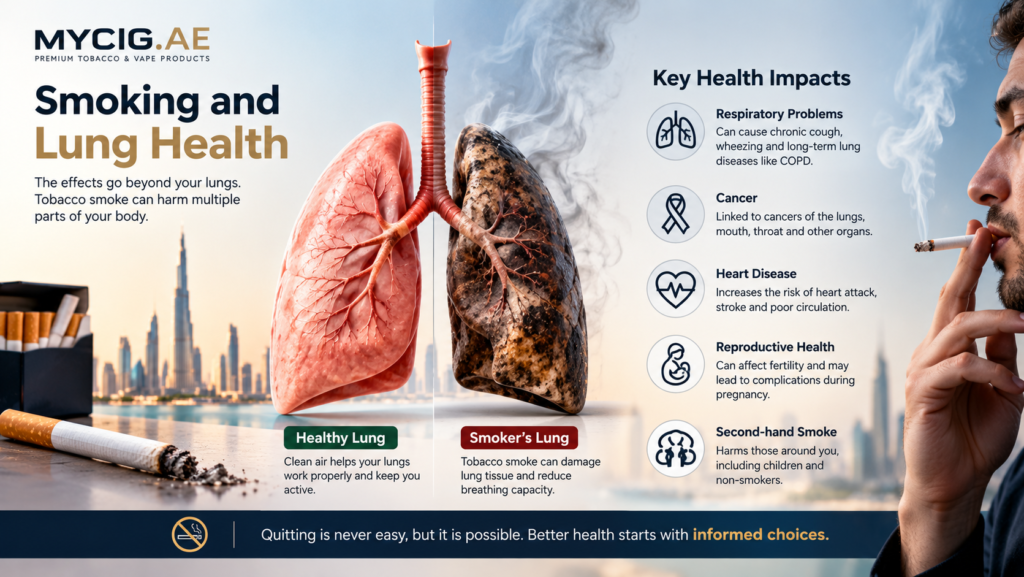
Cancer: Tobacco use is linked to various types of cancer, including those of the lungs, oral cavity, throat, esophagus, and bladder. Carcinogens—cancer-causing substances found in cigarette smoke—can damage cells and lead to the development of disease. Heart Disease and Stroke: Smoking damages blood vessels and contributes to heart-related problems. Carbon monoxide exposure reduces the oxygen supply to the body’s tissues, placing additional strain on the heart.
Impact on Reproductive Health: Tobacco use can affect fertility and lead to complications during pregnancy. Exposure during pregnancy can also harm a developing fetus.
Secondhand Smoke: People nearby can inhale smoke from a burning cigarette and smoke exhaled by a smoker. This exposure is not harmless; it is linked to heart and respiratory diseases and can be particularly dangerous for children.
The WHO confirms that tobacco use is a major preventable cause of disease and premature death worldwide. Read its tobacco and nicotine health information for further evidence.
Does a Lower Tar or Nicotine Number Mean a Cigarette Is Safer?
Not necessarily. Some cigarette packages display machine-measured tar, nicotine, or carbon monoxide yields. These figures come from standardized testing and should not be interpreted as a person’s actual exposure.
Real-world intake can differ because smoking behavior, inhalation patterns, and other factors influence how much smoke enters the body. A lower number does not establish that a particular cigarette is safe.
For example, Mycig lists product specifications for Marlboro Double Mix and Dunhill White. Such information can help readers understand product labeling, but it cannot determine an individual’s overall health risk.
Similarly, differences in filters, cigarette dimensions, or capsule designs should not be mistaken for evidence that a product is harmless.
Nicotine Dependence: Why Quitting Can Be Difficult
Nicotine reaches the brain rapidly when cigarette smoke is inhaled. Repeated use can create dependence, while stopping may lead to cravings, irritability, difficulty concentrating, or changes in mood.
These symptoms can make quitting challenging, particularly for people who have smoked regularly for years. However, dependence is treatable, and professional support can improve the chances of stopping successfully.
Anyone considering quitting can speak with a qualified healthcare professional about counseling, evidence-based treatments, and local cessation services. People don’t need to wait until symptoms develop to seek help.
Tobacco Regulations in Dubai and the UAE
Tobacco products are subject to specific rules across the United Arab Emirates. Federal legislation prohibits the sale of tobacco products to people under 18. The law also restricts smoking in certain places, including circumstances involving children.
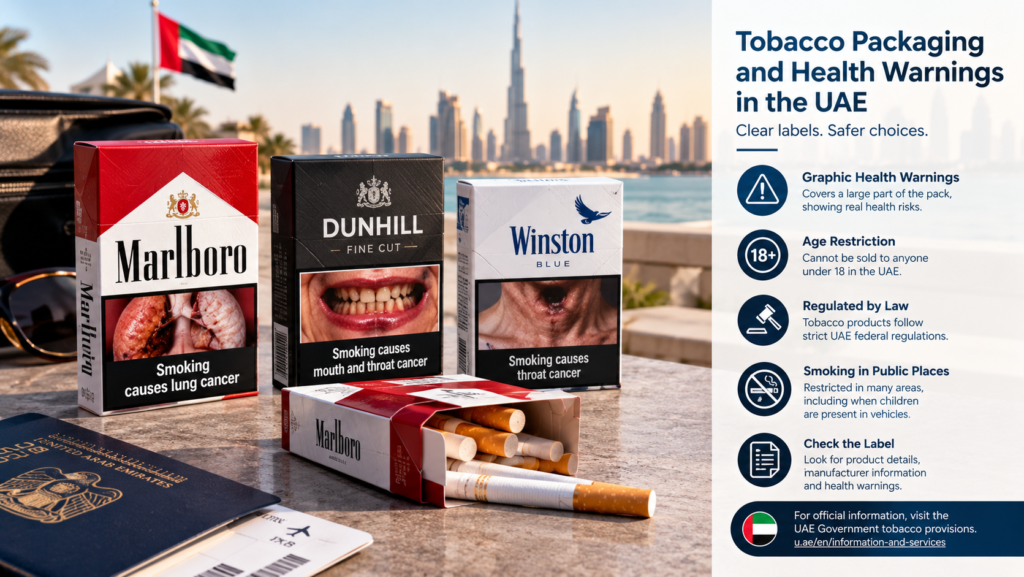
For example, UAE tobacco-control provisions prohibit smoking in private vehicles when a child under 12 is present. Restrictions also apply to designated public and institutional settings.
Residents and visitors should check the rules for their location rather than assuming smoking is permitted wherever it is not explicitly prohibited by signage.
For authoritative details, consult the UAE Government’s tobacco provisions. Regulations may also cover packaging, advertising, taxation, and the sale of tobacco products.
Mycig also publishes general information about cigarettes available in Dubai. Product listings should not replace official government guidance on legal requirements or health risks.
Understanding Cigarette Product Labels
When reading a cigarette package or online listing, check the complete product name, manufacturer information, stated quantity, and any available ingredient or emissions details.
Different variants from the same brand may have different specifications. For instance, Mycig has individual listings for Winston Double Mix and ESSE Black. These pages illustrate how product descriptions can vary in the information they provide.
Other examples include Davidoff Gold and ESSE Change. Treat their listed specifications as product information, not proof of reduced health risks.
For broader category information, readers can also review Mycig’s Dunhill range and ESSE category.
Ultimately, no single label value can capture every harmful substance in cigarette smoke or predict the health outcome for an individual.
Frequently Asked Questions: What are the main components of a cigarette?
A typical cigarette generally consists of processed tobacco, paper, a filter, and sometimes various additives incorporated during production. Burning tobacco generates numerous chemicals, including toxic substances and carcinogens (cancer-causing agents).
Does nicotine cause cancer?
Nicotine is primarily responsible for tobacco dependence. The risk of developing cancer from smoking is mainly due to exposure to the carcinogens present in tobacco smoke; nicotine itself is not the primary agent that directly causes cancer.
Are cigarettes with lower tar content safer?
No. A lower tar content—as measured by machine testing—does not necessarily mean a cigarette is safer. In reality, the actual level of harmful substances a person is exposed to can vary, and smoking is inherently harmful in any case.
Can cigarette filters remove all harmful chemicals?
No. Filters cannot remove all the toxic substances present in cigarette smoke, and the presence of a filter does not make smoking safe.
Is secondhand smoke (exposure to smoke from someone else’s cigarette) harmful?
Yes. It can increase the risk of heart disease and respiratory illnesses. This risk may be even higher for children and other vulnerable individuals.
Can anyone under 18 buy cigarettes in Dubai?
No. Under the United Arab Emirates’ tobacco control laws, selling tobacco products to anyone under 18 is prohibited. Retailers may ask customers for proof of age.
Where can one find reliable information about the health risks associated with tobacco in the United Arab Emirates?
The World Health Organization (WHO) provides reliable, evidence-based information regarding tobacco and nicotine. To learn about local legal requirements, consult the United Arab Emirates government’s tobacco policies and other official government sources.
Conclusion
Understanding cigarette composition requires looking beyond the tobacco leaves or the numbers printed on a cigarette pack. Tobacco combustion creates a complex mixture of substances. Nicotine can lead to addiction, and prolonged exposure to tobacco smoke can cause damage to various organs in the body.
For residents of Dubai or the United Arab Emirates, rather than forming assumptions based on product names, filters, or low numbers displayed on packaging, it is far more effective to seek out reliable health information and remain informed about local tobacco control laws. The evidence is clear: smoking poses serious health risks, and the best way to avoid exposure to the harmful substances found in tobacco smoke is to stay away from it entirely.